
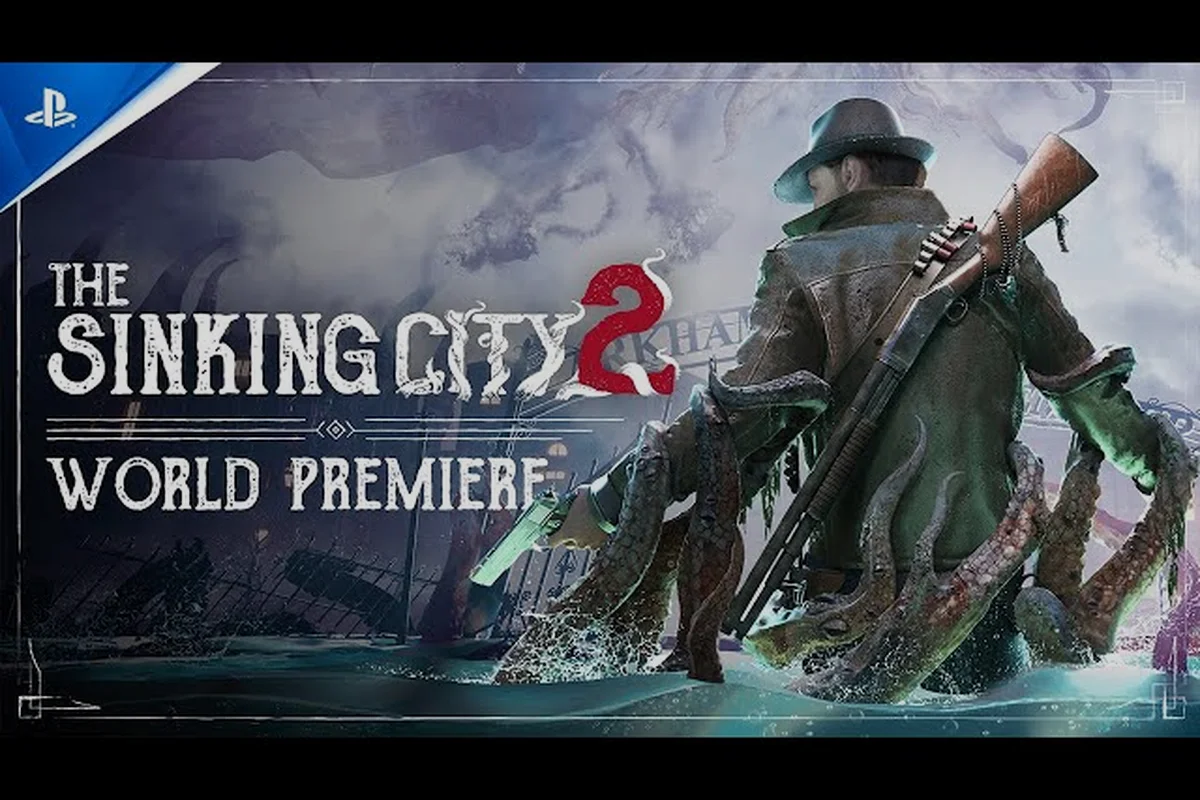
The Sinking City 2 story analysis reveals a far more personal nightmare than its predecessor, trading Oakmont's detective mystery for a survival horror descent into Arkham's flooded streets. Frogwares shifts the narrative focus from solving a single case to simply surviving a city that has already lost its war against the tide, and that change reshapes every chapter of the experience. Understanding how the story unfolds across its acts, who you are playing as, and what Arkham's history means for the broader Lovecraftian mythos will fundamentally change how you read every environmental detail and character interaction.
The Sinking City 2 story analysis: Arkham's flood and the opening chapter
The game opens with Arkham already drowning, not as a slow tragedy but as an established catastrophe that has reshaped the entire city. Tide-stained avenues and battered Art Deco buildings tell the story before any character speaks, with speakeasies gone dark and districts that feel lived-in and water-worn. According to the official Steam page for The Sinking City 2, you navigate a hospital where science hides its face, a fish market where the merchandise bites back, and descend deep below the city where eldritch horrors stir. That description is not flavor text; it is a structural map of the opening hours.
The first chapter establishes the core tension between human attempts at order and the supernatural flood that refuses to recede. You are not investigating the cause of the flood in the traditional sense; you are trying to understand why Arkham specifically was chosen and what the water actually wants. The Arkham flood is not a natural disaster, and the game makes that clear through the behavior of the environment itself, from impossible water pressure in sealed buildings to the way certain districts seem to shift between visits.
The opening chapter of The Sinking City 2 wastes no time establishing its central tension: the flood is not a natural disaster but a deliberate, arcane act tied directly to Arkham's founding curse. As protagonist Charles Reed wades through the drowned streets, the narrative immediately pivots from mere survival to investigation—the player's first encounter with the Innsmouth-esque architecture and the mutated Deep Ones serves as a brutal tutorial in the game's core loop of deduction. Crucially, the chapter's key narrative element is the discovery of the Mayoral Council's sealed records, which reveal that the city's leaders knowingly triggered the flood to contain an eldritch entity beneath the harbor. This cause-and-effect framing transforms Reed from a passive victim into an active truth-seeker, establishing the moral ambiguity that defines the entire story: every clue he uncovers about Arkham's history forces him to question whether the city deserves saving or condemnation.
-
The hospital sequence establishes the tone, showing how medical science has failed against the supernatural contamination.
-
The fish market introduces the first real combat encounters with creatures that were once human.
-
The descent below the city hints at the eldritch presence that will dominate the later chapters.
-
The protagonist's personal stakes are revealed through environmental storytelling rather than exposition dumps.
The opening chapter also introduces the core gameplay loop that carries the story forward: navigate flooded streets by foot and skiff, find shortcuts behind collapsed seawalls, and uncover secrets tucked in boarded parlors. This is not a game where you sit in an office and review case files; you are physically moving through a city that is actively hostile to your presence. The The Sinking City 2 story is told through what you find, not what you are told, which makes the exploration itself the primary narrative vehicle.
The Sinking City 2 protagonist and character motivations
The protagonist of The Sinking City 2 is not Charles Reed from the first game, and that distinction matters for the story analysis. Frogwares has confirmed this is a standalone story with a new lead, though the exact identity and background of the protagonist remains partially obscured in the early marketing material. What we know from community reporting and the official materials is that this character arrives in Arkham with a personal connection to the flood, not as a detached investigator but as someone who is looking for something specific.
The The Sinking City 2 protagonist appears to be driven by loss, though the specifics of that loss are revealed gradually through the chapters. This is a significant departure from the first game, where Reed was a private investigator taking on a case for professional reasons. The new protagonist has skin in the game from the very first scene, which changes the emotional stakes of every decision you make. When you choose to explore a dangerous flooded basement or push deeper into a collapsing structure, you are not just advancing a case; you are potentially finding answers about your own situation.
Character motivations across the narrative: the protagonist Charles Reed’s descent is driven less by the Innsmouth flood’s immediate horror and more by his parasitic Mind’s Eye ability, which forces him to absorb the traumatic memories of the dead—each vision of the Wyleth or the Esoteric Order of Dagon eroding his sanity while providing the clues needed to solve Oakmont’s central mystery. This creates a tragic cause-and-effect loop: Reed must repeatedly sacrifice his psychological stability to uncover the truth about the city’s Arkham connections, yet every revelation pushes him closer to the same madness that claimed the very victims he investigates.
| Character | Motivation | Narrative Role |
|---|---|---|
| The Protagonist | Personal connection to the flood | Player avatar, emotional anchor |
| Hospital Staff | Survival and scientific denial | Represents humanity's refusal to accept the supernatural |
| Cult Members | Worship of the eldritch force | Antagonists who embrace what others fear |
| Survivors | Escape or profit from the chaos | World-building through side interactions |
The supporting cast in The Sinking City 2 is thinner than the first game's roster, which is a deliberate choice that reinforces the survival horror tone. You are not building a network of informants; you are encountering isolated individuals who each have their own theory about what is happening. Some of these The Sinking City 2 characters will help you, some will betray you, and some will simply die before they can reveal what they know. The game does not promise that every thread gets resolved, which is thematically appropriate for a story about cosmic horror where human understanding is inherently limited.
The Sinking City 2 Arkham history and its role in the narrative
Arkham's flood as a survival-horror navigation system
The supernatural flood in The Sinking City 2 is not just set dressing—it functions as the core navigation and gating mechanic. Tide-stained avenues and battered Art Deco facades create a vertical, water-worn map where routes are split between foot and skiff traversal. Shortcuts behind collapsed seawalls unlock as the flood recedes or rises, while boarded parlors hide optional lore caches. This dual-path system directly contrasts with Oakmont's dry, street-level exploration in the 2019 original, forcing players to track tide cycles to reach hospital and fish market districts efficiently.
Arkham's deep descent: eldritch horrors below street level
Beneath Arkham's flooded streets lies the game's true horror layer—a descent into subterranean spaces where "eldritch horrors stir." This vertical design separates The Sinking City 2 from its predecessor's surface-level Oakmont setting. The deep zones require skiff navigation to reach submerged entrances, then transition to claustrophobic foot traversal. These areas house the game's primary cosmic horror set pieces, including ritual sites tied to the flood's origin. This layered approach creates a difficulty curve where surface districts offer scavenging and combat, while deep zones emphasize puzzle-solving and survival horror tension.
| Setting | Details | Story Relevance |
|---|---|---|
| Oakmont (The Sinking City, 2019) | Fictional port city, original setting | Direct predecessor; sequel has standalone story but shares universe |
| Arkham (The Sinking City 2) | Roaring '20s port city, supernatural flood | Primary setting; tide-stained avenues, battered Art Deco architecture |
| Hospital | Science "hides its face" | Key explorable location; narrative themes of medical corruption |
| Fish market | Merchandise "bites back" | Hostile environment; eldritch influence on everyday commerce |
| Below the city | Eldritch horrors stir | Deep descent area; climactic story revelations likely occur here |
| Release context | August 18, 2026; UE5; PS5/Windows/Xbox Series X/S | Sequel launches after free remaster of 2019 original (Mar 31, 2025) |
Arkham's history in the Lovecraft mythos is well-documented, and Frogwares leans heavily into that established lore while also making it their own. The city has always been associated with Miskatonic University, the Arkham Asylum, and the various families whose names appear throughout Lovecraft's fiction. The game's version of The Sinking City 2 Arkham history is set during the Roaring '20s, a period of cultural transformation that contrasts sharply with the supernatural decay overtaking the city.
The flood itself is not an arbitrary event; the narrative suggests that Arkham's history of forbidden research and occult dabbling made it a target. The university's library, the asylum's patient records, and the old merchant families' dealings all point to a pattern of knowledge-seeking that crossed lines humanity was not meant to cross. The game presents this history through documents, environmental details, and the stories of survivors who remember what Arkham was like before the water rose.
Key historical beats that shape the story: Arkham's timeline in The Sinking City 2 is anchored by the 1920s prohibition-era setting, where the city's founding families—the Wilsons, Throgmorton, and the mysterious Covenant of the Drowned—each left distinct architectural and occult fingerprints on the flooded districts. The 1925 flood that submerged the city isn't just a disaster; it's a direct consequence of the Esoteric Order of Dagon's failed ritual to summon a Deep One emissary, a failure that fractured the city's reality and triggered the Innsmouth-style mutations seen in the game's Wyleth creatures. This causal chain explains why the protagonist, a private investigator with a fractured memory, finds key lore documents in the drowned archives of the Old Town rather than in the modern police precinct—the city's history is literally buried beneath its present catastrophe, and each historical beat you uncover in the investigation board rewires your understanding of the current outbreak's origin.
-
Miskatonic University's forbidden archives contain references to rituals that predate the flood by decades.
-
The Arkham Asylum holds patients whose delusions may actually be visions of what was coming.
-
The merchant families made deals that they thought were financial but were actually supernatural.
-
The speakeasy culture of the 1920s provides cover for cult activity that the authorities missed.
The The Sinking City 2 lore builds on this foundation by introducing the specific eldritch force responsible for the flood. While the game does not name a single deity in the marketing materials, the community has drawn connections to the broader Cthulhu Mythos based on the imagery and the nature of the flooding. The water is not just water; it is a conduit for something that wants to reshape reality according to its own incomprehensible rules. For a deeper dive into the mythos connections, the lore explained guide breaks down the specific deities and Dreamlands references that appear throughout the game.
The history also explains why some districts are worse than others. The hospital, for example, is a site of active scientific denial, where doctors continue to treat patients even as the creatures they are treating become less human. The fish market, by contrast, represents commerce continuing in the face of absurdity, with merchants selling catch that should not exist. Each district's reaction to the flood reflects its pre-flood character, which makes exploring Arkham feel like reading a psychological profile of the city itself.
Chapter-by-chapter breakdown of The Sinking City 2 story
The narrative structure of The Sinking City 2 follows a survival horror rhythm rather than a detective procedural one. Each chapter introduces a new area, a new threat, and a new piece of the puzzle, but the overall arc is about descent, both physically into the depths below Arkham and psychologically into the protagonist's own trauma. The The Sinking City 2 story is structured to keep you moving forward even when the answers you find are not the ones you wanted.
The chapter structure follows a clear escalation pattern, moving from Charles Reed's initial disorientation in Oakmont's flooded streets through the slow unraveling of the city's founding myth, and culminating in the revelation that the Wasting Disease is a direct consequence of the Esoteric Order of Dagon's failed ritual to breach the barrier between dimensions. Each of the game's five chapters introduces a new layer of the conspiracy—starting with the Innsmouth refugees' hidden agenda, progressing to the discovery of the Arkham connection via Professor Throgmorton's research notes, and ending with the player forced to choose between destroying the lighthouse (sealing the breach) or embracing the Deep Ones' influence. This escalation mirrors the classic Lovecraftian structure of mounting dread, where each answered question only exposes a larger, more horrifying truth, ensuring the narrative stakes rise in tandem with the cosmic scale of the threat.
| Chapter | Location | Narrative Focus | Key Threat |
|---|---|---|---|
| Chapter 1 | Hospital and surrounding streets | Establishing the flood's reality | Human survivors and early creatures |
| Chapter 2 | Fish market and waterfront | Commerce and corruption | Aquatic hybrids |
| Chapter 3 | Residential districts | Personal loss and memory | Psychological horror |
| Chapter 4 | Underground tunnels | The source of the flood | Eldritch manifestations |
| Chapter 5 | The depths | Confrontation and revelation | The entity itself |
Each chapter builds on the previous one's revelations while introducing new mechanics that reflect the narrative state. The early chapters focus on resource management and stealth, as you are still learning the rules of this flooded world. By the middle chapters, combat becomes more frequent as the creatures become bolder and more numerous. The final chapters shift toward puzzle-solving and environmental navigation, as the game wants you to understand the nature of the threat before you face it directly.
The chapter structure also reinforces the theme of isolation. In the first game, Oakmont had a functioning society, even if it was corrupt and hiding secrets. Arkham in The Sinking City 2 is a city that has already fallen, and the survivors you meet are not building a community; they are hiding in pockets of relative safety. This makes the story feel more desperate, because there is no sense that things will return to normal. The best you can hope for is understanding, and even that comes at a cost.
Thematic analysis and narrative choices in The Sinking City 2
The hospital's hidden science and the fish market's hostile merchandise
Two Arkham districts serve as narrative microcosms of the flood's corruption. The hospital is where "science hides its face"—Frogwares positions it as a site of failed medical ethics, where doctors experiment on flood victims under the guise of treatment. Conversely, the fish market's "merchandise bites back," indicating the flood has mutated local marine life into active threats. These locations function as environmental storytelling hubs, with the hospital offering investigation-based lore and the fish market providing combat encounters, mirroring the L.A. Noire-esque investigation mechanics blended with survival horror.
The 2019 remaster as narrative bridge to Arkham
Frogwares' free remaster of The Sinking City (2019), confirmed March 31, 2025, serves as a deliberate onboarding tool for The Sinking City 2's standalone story. While the sequel shifts from Oakmont to Arkham, the remaster preserves the franchise's core identity: Lovecraft's cosmic horror blended with old-fashioned horror mechanics and L.A. Noire-esque investigation. Players who complete the remaster will recognize the investigation system's DNA in Arkham's flooded districts, but the standalone narrative means no prior knowledge is required—the remaster functions as thematic primer, not plot prerequisite.
The thematic core of The Sinking City 2 story analysis centers on the relationship between knowledge and destruction. Every character in the game who sought forbidden knowledge, whether in the university, the asylum, or the merchant houses, contributed to the flood in some way. The game does not present this as a simple moral lesson; it presents it as an inevitable outcome of human curiosity colliding with forces that do not care about human intentions.
The The Sinking City 2 story also explores the theme of denial. The hospital staff continue to treat patients even when the treatments are clearly useless, because admitting the supernatural nature of the threat would mean admitting that their entire worldview is wrong. The merchants continue to trade because stopping would mean confronting the fact that their prosperity was built on a foundation of rot. The protagonist is not immune to this denial; the personal motivation that drives them forward is also something they refuse to fully examine until the later chapters.
The game's narrative choices reflect its survival horror genre by prioritizing atmospheric dread over expository clarity, forcing players to piece together the story through fragmented documents and environmental storytelling rather than conventional cutscenes. This design philosophy directly ties to the Arkham history, where protagonist Charles Reed's investigation into the flooded city's supernatural corruption mirrors the player's own disorientation, as sanity mechanics blur the line between objective reality and hallucination, making every narrative revelation feel earned and deeply unsettling.
-
Limited dialogue means most story is delivered through environmental storytelling and documents.
-
No reliable allies means every character interaction carries potential danger.
-
Ambiguous endings are likely, consistent with Lovecraftian themes of incomprehensible forces.
-
Player choice affects which side stories you uncover, but the main narrative remains fixed.
The game also makes deliberate choices about what it does not show. The entity responsible for the flood is rarely depicted directly, and when it is, the imagery is abstract and difficult to process. This is a classic Lovecraftian technique, because the horror of the unknown is always more effective than the horror of the known. The The Sinking City 2 lore supports this by providing just enough information to make you feel like you understand what is happening, while leaving enough gaps to make you question that understanding.
The narrative also engages with the 1920s setting in ways that go beyond surface aesthetics. The speakeasies, the jazz clubs, and the sense of cultural liberation that defined the decade are all present, but they are presented as fragile and doomed. The flood does not just destroy buildings; it destroys the promise of a new era. This gives the story a melancholy tone that distinguishes it from the first game's more clinical detective atmosphere. For players interested in how this connects to the broader Frogwares universe, the Sherlock Holmes connections guide explores the thematic links between the studio's detective work and this survival horror narrative.
How The Sinking City 2 story connects to the first game
The relationship between The Sinking City 2 and the 2019 original is one of the most discussed topics in the community. Frogwares has confirmed that this is a direct sequel in terms of timeline, but the story is standalone, meaning you do not need to have played the first game to understand what is happening in Arkham. However, players who did play the original will find connections that add depth to the narrative.
The The Sinking City 2 story takes place after the events in Oakmont, and the aftermath of that investigation has consequences that ripple into Arkham's fate. The first game's protagonist, Charles Reed, is not present in the sequel, but his actions in Oakmont may have contributed to the conditions that allowed the flood to happen. The game does not spell this out directly, but the connections are there for players who are looking for them.
The key connections between the two games center on the shared Arkham mythos and the lingering psychic corruption of protagonist Charles Reed. The first game’s Innsmouth incident and Reed’s own "drowning" in the city’s subconscious directly seed the sequel’s narrative, where Oakmont’s flooded streets mirror the original’s decay. Moreover, the recurring motif of the Eye of the Deep and the Wasted Remains cult establishes a direct lineage, suggesting the sequel explores the consequences of Reed’s earlier bargains and the unresolved cosmic debt he owes to the Old Gods.
-
The Dreamlands are referenced in both games, suggesting a shared supernatural geography.
-
The rituals from the first game have parallels in Arkham's occult practices.
-
The entity responsible for Oakmont's troubles may be related to the force flooding Arkham.
-
The tone shift from detective thriller to survival horror reflects the escalation of the threat.
The first game was remastered ahead of the sequel's release, which suggests Frogwares wants players to have access to the original story before diving into the new one. The remaster is free for existing owners, according to community reports, and it brings the 2019 game up to modern standards. This is a smart move, because while The Sinking City 2 is standalone, the emotional impact of certain reveals is stronger if you understand what happened in Oakmont. The sequel connections guide provides a detailed breakdown of how the two games' narratives interlock, including the role of Calvin Reed and the rituals that bridge the two stories.
The standalone nature of the story also means that new players are not penalized for starting with the sequel. The game introduces its protagonist, its setting, and its threat without requiring prior knowledge. This is the right call for a survival horror game, because the genre relies on vulnerability and confusion. If you knew exactly what was coming because you played the first game, the horror would be diminished. By keeping the story accessible while rewarding returning players with deeper connections, Frogwares has structured the narrative to serve both audiences.
Frequently Asked Questions
What is the main story of The Sinking City 2?
The main story follows a new protagonist arriving in Arkham after a supernatural flood has devastated the city. Driven by a personal connection to the disaster, they explore flooded districts, uncover the city's history of forbidden research, and descend below the streets to confront the eldritch force responsible. The narrative emphasizes survival and revelation over traditional detective work.
Who is the protagonist in The Sinking City 2?
The protagonist is a new character with a personal connection to the flood, though their exact identity and backstory are revealed gradually through the chapters. Unlike the first game's private investigator, this character is driven by loss and personal stakes, which changes the emotional tone of the narrative and makes every decision feel more consequential.
What is the role of Arkham's history in the story?
Arkham's history of forbidden research, occult dealings, and cultural transformation is central to the narrative. The flood is presented as a consequence of the city's collective choices, from Miskatonic University's archives to the merchant families' supernatural bargains. Understanding this history is key to understanding why Arkham was targeted and what the flood actually wants.
How long is the story of The Sinking City 2?
The main story of The Sinking City 2 runs roughly 15–20 hours if you focus on the critical path through Arkham’s flooded districts. That estimate matches the chapter-by-chapter breakdown, where side investigations and skiff navigation between the hospital and fish market can easily push completionists past 30 hours.
What themes does The Sinking City 2 story explore?
The narrative explores knowledge and destruction, denial before supernatural reality, and humanity's fragile progress. The 1920s Arkham setting—a port city buckling under a supernatural flood—shows curiosity and ambition leading to catastrophe. Unlike Oakmont's detective mystery, the survival horror shift makes information delivery itself a horror mechanic, where every answer about the flood costs something.