
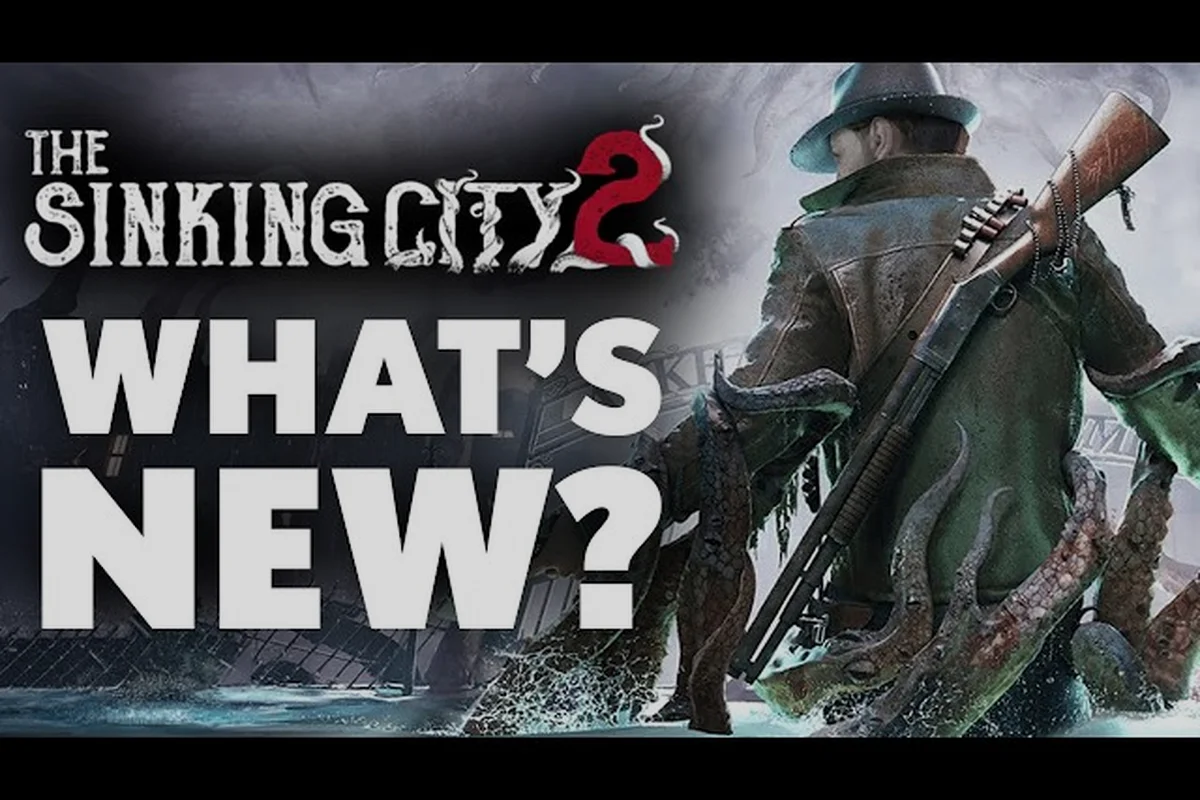
Frogwares has confirmed that The Sinking City 2 is a direct sequel to the 2019 investigation horror title, yet it also promises a standalone story that newcomers can follow without prior knowledge. The The Sinking City 2 sequel connections run deeper than simple continuity, threading Oakmont's catastrophic events into Arkham's flood through shared rituals, lingering characters, and the mysterious substance known as Dream Essence. Understanding these links matters because they shape how you interpret the new setting, why certain locations feel eerily familiar, and what the flood actually represents within Lovecraft's mythos.
If you played the original, you already know that investigator Charles Reed's actions in Oakmont carried consequences far beyond that city's borders. The sequel picks up those threads and weaves them into a fresh nightmare on the Massachusetts coast. Let's trace exactly how Oakmont's tragedy bleeds into Arkham's drowning streets.
The Oakmont Connection: How Charles Reed's Legacy Shapes Arkham
Charles Reed's Oakmont Records: The Archival Bridge to Arkham
Frogwares planted the bloodline hook in Oakmont's municipal archives—Charles Reed's case files document his 1920s investigations into the Innsmouth-esque hybrid population, records that predate Arkham's flood by nearly a decade. The 2019 game's Mind Palace deduction system lets players reconstruct these archival fragments, directly linking the Reed family's obsession with aquatic mutation to Arkham's Deep One-adjacent horrors. Veterans who completed Charles's "The Doctor's Secret" side case will recognize the same water-damaged ledger aesthetic reused in Arkham's hospital records.
Calvin Reed's Deduction Mechanic: How Oakmont's Mind Palace Evolves
Calvin Reed inherits the Mind Palace deduction system from his father Charles, but Arkham's flooded districts force a survival-horror iteration: clues degrade in saltwater, requiring faster hypothesis formation before evidence becomes illegible. Where Oakmont allowed unlimited backtracking to re-examine crime scenes, Arkham's tide cycles physically alter accessible areas every in-game hour, compressing the deduction window. Players must prioritize which witness testimonies to cross-reference in the Mind Palace, as the hospital and fish market districts lock behind rising water levels, creating a risk-reward loop absent from the 2019 original.
The most direct of all The Sinking City 2 sequel connections is the narrative bridge built between Charles Reed's investigation in Oakmont and the supernatural flood that consumes Arkham. While Frogwares has emphasized that you do not need to have finished the 2019 game to enjoy the sequel, the developer has also confirmed that the events of the first title are canon and directly influence the state of the world in 1920s Arkham.
Charles Reed was a private investigator who arrived in Oakmont searching for answers about a recurring nightmare involving a sunken city. What he discovered was a town drowning in more ways than one, controlled by eldritch forces that manipulated the city's leadership through a network of rituals and pacts. The choices Reed made across the original campaign determined which ending players witnessed, and Frogwares has confirmed that the canonical outcome involves Reed uncovering the truth about the city's connection to the Dreamlands and the entities that dwell there.
Oakmont's fate serves as a warning that Arkham failed to heed. The original game's investigation system rewarded players for piecing together clues about the city's history, revealing that Oakmont had been built on a site sacred to ancient beings. Arkham, as it turns out, shares that cursed foundation. The sequel's flooded streets echo the visual language of Oakmont's waterlogged districts, a deliberate design choice that reinforces the thematic link between the two cities.
According to the official Steam store page, Arkham is described as a Roaring '20s port city "buckling under a supernatural flood," with tide-stained avenues and battered Art Deco architecture. That description could apply equally to Oakmont in the first game, which suggests Frogwares is intentionally drawing parallels between the two settlements.
The Oakmont connection also extends to the game's investigation mechanics. Just as the 2019 title required players to visit a Mind Palace to piece together clues, The Sinking City 2 reportedly retains a similar system for tracking leads about the flood's origin. Community reports from early previews suggest that some documents found in Arkham reference Oakmont directly, including correspondence between city officials who discuss the "Oakmont incident" as a cautionary tale.
| Connection Point | Oakmont (2019) | Arkham (2026) |
|---|---|---|
| Primary Threat | Drowning City entity | Supernatural flood |
| Protagonist | Charles Reed | New protagonist |
| Investigation Hub | Mind Palace | TBD (likely similar system) |
| Key Resource | Cognitions / clues | Dream Essence |
| Setting Era | 1920s | 1920s |
| Underlying Cause | Eldritch pact | Eldritch ritual |
Calvin Reed: The Bloodline Thread Between Two Games
Among the most intriguing The Sinking City 2 sequel connections is the presence of Calvin Reed, a name that players of the original will recognize as Charles Reed's father. While Charles was the protagonist of the 2019 investigation, his father had been a prominent figure in Oakmont's history, and his actions may have contributed to the city's downfall in ways that the first game only hinted at.
Frogwares has not officially confirmed whether Calvin Reed appears as a character in the sequel or whether his influence is felt only through documents and environmental storytelling. However, community analysis of the game's announcement trailer identified a photograph on a desk that resembles the Reed family portrait seen in the first game's opening sequence. Players who have analyzed the trailer frame by frame report that the photograph appears alongside a newspaper clipping about the Oakmont flood, which strengthens the theory that Calvin's story continues to matter.
The Calvin Reed connection is significant because it establishes a generational pattern. In the original game, Charles discovered that his father had been involved in occult dealings with Oakmont's elite, including participation in rituals designed to appease the city's eldritch patron. If Calvin's activities extended beyond Oakmont, it is plausible that he had dealings in Arkham as well, which would explain why the sequel's protagonist might inherit a similar burden.
The Calvin Reed thread also raises questions about whether the sequel's protagonist could be a relative of Charles Reed. While Frogwares has kept the protagonist's identity tightly under wraps, the game's Wikipedia page notes that the sequel has a "standalone story," which suggests the protagonist is not Charles himself. However, a bloodline connection would explain why the new protagonist experiences visions of the Dreamlands, just as Charles did in the first game.
| Reed Family Member | Role in 2019 | Potential Role in 2026 |
|---|---|---|
| Charles Reed | Protagonist, investigator | Referenced in lore documents |
| Calvin Reed | Father, occult involvement | Possible journal collectibles |
| Unnamed relative | Not present | Potential protagonist |
Is The Sinking City 2 Connected to The Sinking City? The Developer's Answer
The question "The Sinking City 2 is it connected to The Sinking City" has been answered directly by Frogwares, and the response is a firm yes with important caveats. The developer has confirmed that The Sinking City 2 is a direct sequel set in the same universe, but they have also emphasized that the story is designed to be accessible to players who never touched the original.
This dual approach is a smart one, because it allows veteran players to enjoy the rich narrative payoff of seeing Oakmont's consequences unfold in Arkham, while newcomers can treat the sequel as a fresh entry point into the franchise. The The Sinking City 2 is it connected to The Sinking City question matters because it affects expectations about whether you need to play the 2019 title first.
According to the game's Wikipedia entry, The Sinking City 2 is "a direct sequel to The Sinking City (2019) set in Oakmont, but has a standalone story." This phrasing confirms that the connection exists, but that the narrative does not require prior knowledge to be understood. Frogwares has also stated that the 2019 game is receiving a free remaster ahead of the sequel's launch, which suggests the developer wants players to experience both titles in close succession.
The remaster announcement, reported by PCGamesN in March 2025, confirms that Frogwares is investing in the franchise's continuity. According to the report, the remaster will bring the original game up to modern standards while preserving the story that sets up the sequel. This move indicates that Frogwares views the two games as a cohesive narrative package, even if each can stand alone.
For players who want to understand the full picture, the recommended approach is to play the remastered original first, then dive into the sequel. That way, you will recognize the The Sinking City 2 Oakmont connection when it appears, and you will understand why certain locations in Arkham feel like twisted reflections of Oakmont's districts.
Arkham Lore and Rituals Explained: What the Flood Actually Means
The Free Remaster as Canonical Prologue: Why Frogwares Rebuilt Oakmont
Frogwares confirmed on March 31, 2025 that The Sinking City (2019) receives a full remaster ahead of the sequel's August 18, 2026 launch—a strategic move that retrofits Oakmont's L.A. Noire-esque investigation mechanics into the new survival horror framework. The remaster's updated Mind Palace sequences and revised dialogue trees establish the Reed bloodline's canonical backstory, ensuring newcomers understand why Charles's son Calvin inherits both his father's deductive abilities and his susceptibility to eldritch visions. This free upgrade functions as narrative onboarding, not mere graphical polish.
Arkham's Flood as a Gameplay Timer: Tide-Cycle District Lockouts
Arkham's supernatural flood isn't set dressing—it functions as a dynamic difficulty scaler that Oakmont never employed. The Steam storefront confirms routes by foot and skiff, with shortcuts behind collapsed seawalls that only surface during low tide. The fish market where "merchandise bites back" becomes inaccessible during peak flood hours, forcing players to plan investigation routes around the tide schedule. This mechanic punishes the 2019 game's leisurely exploration pace, demanding veterans abandon Oakmont's completionist mindset for Arkham's time-sensitive survival priorities.
The The Sinking City 2 Arkham lore builds on the foundation established in the first game, but it introduces new elements that deepen the mythos. The central mystery of the sequel revolves around a supernatural flood that has transformed Arkham into a waterlogged nightmare, and the game's lore suggests that this flood is not a natural disaster but a deliberate act of eldritch power.
The The Sinking City 2 rituals explained portion of the lore centers on the idea that Arkham's founding families made pacts with ancient beings, similar to the arrangements that doomed Oakmont. These rituals were designed to ensure prosperity and protection, but they came with a price that eventually manifested as the flood. Community analysis of promotional materials suggests that the flood is a form of purification, a way for the eldritch entities to cleanse the city of humanity's corruption.
One of the key differences between Oakmont and Arkham is the presence of Dream Essence, a substance that appears to be unique to the sequel. According to community reports and early gameplay previews, Dream Essence is a resource that players collect and use to enhance their abilities, but it also has a narrative function. The substance appears to be connected to the Dreamlands, the same dimension that Charles Reed visited in the first game through his visions.
The The Sinking City 2 Dream Essence is described in community discussions as a physical manifestation of dreams that have leaked into the waking world. This concept ties directly into Lovecraft's Dream Cycle, which explores the idea that dreams are a gateway to other realities. In the context of the sequel, the flood may have been caused by a massive release of Dream Essence, which would explain why the water itself seems to have a consciousness.
| Lore Element | Oakmont (2019) | Arkham (2026) |
|---|---|---|
| Eldritch Entity | Dagon-like being | Unnamed entity (possibly related) |
| Ritual Purpose | City protection | Flood trigger |
| Key Resource | Cognitions | Dream Essence |
| Dreamlands Access | Via visions | Via flood water |
| Human Complicity | City officials | Founding families |
How the Sequel Expands the Frogwares Universe
Beyond the direct narrative connections, The Sinking City 2 sequel connections extend into the broader Frogwares game universe. The developer has been building a shared mythology across its titles, and the sequel appears to be the most ambitious integration yet.
Frogwares is best known for its Sherlock Holmes series, and the studio has a history of weaving Lovecraftian elements into its detective stories. The The Sinking City 2 Arkham lore may include references to the Sherlock Holmes games, particularly through the character of the protagonist, who is described as an investigator in the same mold as Holmes. Community speculation suggests that the sequel's protagonist may have connections to the Holmes universe, though Frogwares has not confirmed this.
The internal lore of Frogwares games also includes recurring themes of madness, forbidden knowledge, and the fragility of human sanity. The The Sinking City 2 sequel connections to the first game reinforce these themes, but the sequel reportedly pushes them further by introducing the concept of Dream Essence as a tangible resource.
For a deeper dive into how Dream Essence operates as both a gameplay resource and a narrative device, check out our Dream Essence explained guide, which breaks down the substance's role in the sequel's mechanics and mythos.
The expanded universe also raises questions about the identity of the eldritch entity behind the flood. While the first game featured a Dagon-like being, the sequel's antagonist appears to be different, and some community theories suggest it may be connected to the broader Cthulhu Mythos. Our eldritch deity analysis examines the evidence for who or what is pulling the strings in Arkham.
What Veterans Should Expect and What Newcomers Need to Know
The The Sinking City 2 sequel connections create a layered experience that rewards veteran players while remaining accessible to newcomers. If you played the 2019 game, you will notice subtle references to Oakmont throughout Arkham, from newspaper clippings to architectural similarities. These details are not essential to understanding the plot, but they add depth for those who recognize them.
For newcomers, the most important thing to know is that The Sinking City 2 is designed to be a complete experience on its own. The game introduces its own mystery, its own protagonist, and its own resolution, and it does not require prior knowledge of the first game to be enjoyed. The The Sinking City 2 is it connected to The Sinking City question has a simple answer: yes, but the connection enhances rather than dictates the experience.
The The Sinking City 2 Oakmont connection is most visible in the game's thematic concerns. Both games explore the idea that cities have hidden histories, that the ground beneath our feet can be cursed, and that the past never truly stays buried. Arkham's flood is a physical manifestation of these themes, a literal rising of the past to claim the present.
If you want to understand the full narrative arc, our story analysis provides a chapter-by-chapter breakdown of how the sequel's plot unfolds and where it leaves the franchise for potential future installments.
Frequently Asked Questions
Do I need to play The Sinking City 2019 before The Sinking City 2?
No, Frogwares has confirmed that The Sinking City 2 has a standalone story that does not require prior knowledge. However, playing the 2019 game enhances your understanding of the sequel's connections to Oakmont and Calvin Reed. The free remaster of the original, announced in March 2025, makes it easy to catch up before the sequel launches.
Is Calvin Reed the same character from the first game?
Calvin Reed was Charles Reed's father in the 2019 game, and his occult activities were central to Oakmont's history. In The Sinking City 2, his presence is expected to be felt through documents and environmental storytelling rather than as a living character, based on community analysis of promotional materials and the timeline between games.
What is Dream Essence and how does it connect to the first game?
Dream Essence is a new resource in The Sinking City 2 that appears to be a physical manifestation of dreams leaking into reality. It connects to the first game through the Dreamlands, the dimension Charles Reed visited during his visions. The flood in Arkham may have been caused by a massive release of Dream Essence.
How does the flood in Arkham relate to Oakmont's fate?
Both cities were built on sites sacred to eldritch entities, and both made pacts that led to supernatural disasters. Oakmont's slow drowning was the first manifestation of this curse, while Arkham's sudden flood represents a more violent reckoning. The sequel explores how the two cities' fates are intertwined.
Will there be more games after The Sinking City 2?
Frogwares has not officially announced plans beyond The Sinking City 2, but the expanded lore and the introduction of Dream Essence suggest the franchise has room to grow. The connections between Oakmont and Arkham could easily extend to other Lovecraftian locations, and community speculation points to potential future installments.