
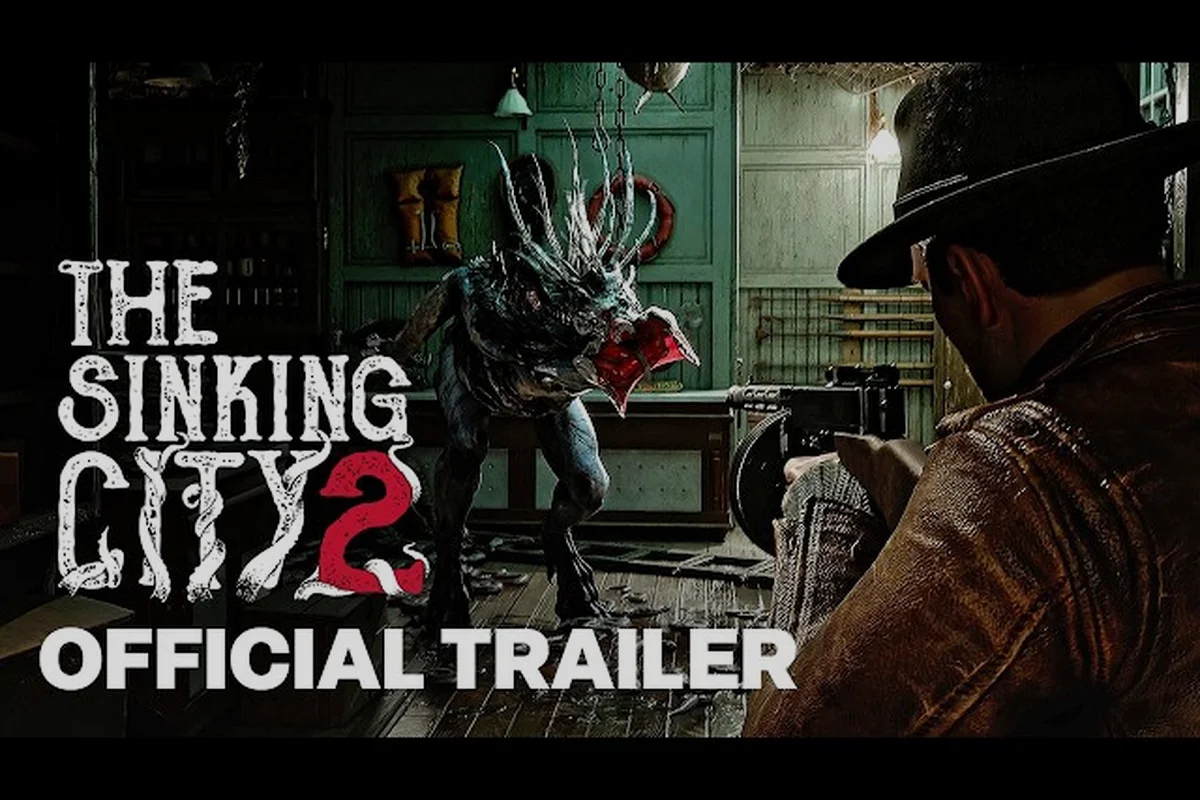
The Sinking City 2 Dreamlands lore is the connective tissue between Arkham's supernatural flood and the unseen forces pulling the strings, and understanding it changes how you read every investigation. Frogwares has confirmed the sequel shifts from Oakmont to Arkham, a Roaring '20s port city buckling under a supernatural flood, where tide-stained avenues and battered Art Deco landmarks hide secrets in boarded parlors. The Dreamlands — Lovecraft's alternate dimension of dreamers and slumbering gods — sits at the heart of the antagonist's plan, and tracing its timeline reveals why Dagon's influence reaches so deep into the waking world. The Dreamlands — Lovecraft's alternate dimension of dreamers and slumbering gods — sits at the heart of the antagonist's plan, and tracing its timeline reveals why Dagon's influence reaches so deep into the waking world, a thread that becomes even more tangled when you factor in how the narrative loops back on itself, which is why our breakdown of the New Game Plus system's hidden dream-echoes is essential for understanding the true sequence of events.
The Sinking City 2 Dreamlands: What the Flood Actually Unlocked
Dagon's Influence: The Fish Market's Hostile Merchandise
The fish market serves as Dagon's tangible foothold in Arkham, where the merchandise literally bites back. This location functions as a combat encounter disguised as a resource hub, with mutated aquatic life attacking players who linger too long. The market's layout—tight corridors between water-worn stalls—forces close-quarters combat, contrasting sharply with the open-water skiff encounters elsewhere. Frogwares designed this area to test the player's resource management, as ammunition spent here is ammunition unavailable for the hospital's science-hiding horrors. The market's hostility escalates as the flood rises, with more aggressive spawns during peak water levels.
Arkham's Vertical Exploration: Skiff Routes and Seawall Shortcuts
Arkham's flooded districts demand mastery of both foot and skiff navigation, with the game's Unreal Engine 5 rendering creating distinct traversal challenges. The boarded parlors hide secrets accessible only during specific flood stages, while collapsed seawalls provide time-sensitive shortcuts that reward map knowledge. This vertical design—from street-level Art Deco facades to submerged basements—creates a three-dimensional exploration loop absent from the original Oakmont setting. Players must constantly reassess routes as water levels shift, with the fish market's hostile merchandise serving as a natural barrier that funnels players toward safer, if longer, skiff paths.
The Dreamlands in Lovecraft's mythos is not a metaphor or a hallucination; it is a real, layered plane that dreamers visit when their minds slip past the threshold of sleep. In The Sinking City 2 backstory, the supernatural flood that drowns Arkham is not merely a weather event — it is a dimensional breach that thins the membrane between the waking city and the Dreamlands. Community analysis of the game's trailers and developer commentary suggests that the floodwaters themselves carry traces of this other realm, which is why certain districts feel "water-worn" and why eldritch horrors stir beneath the city.
The timeline of the breach matters more than most players realize, because it explains why Arkham's collapse follows a pattern rather than random chaos. Based on the official Steam store page, the city is described as a place where "science hides its face" and "the merchandise bites back" — details that point to the Dreamlands bleeding into specific institutions first.
| Timeline Event | In-Game Evidence | Dreamlands Connection |
|---|---|---|
| Initial flood surge | Tide-stained avenues, submerged Art Deco facades | First dimensional tear opens beneath the harbor |
| Hospital corruption | Science hides its face in the medical district | Dreamlands entities mimic medical staff |
| Fish market outbreak | Merchandise bites back at vendors | Deep ones and Dreamlands fauna intermingle |
| Descent below the city | Eldritch horrors stir in submerged tunnels | Direct access point to the Dreamlands' lower strata |
The flood acts as a catalyst, not a cause — it exposes a pre-existing weakness in Arkham's reality. Players who explore the early districts will notice that the water level rises in stages, which mirrors the Dreamlands' own tiered geography. This is not a coincidence; the game's level design intentionally parallels the vertical structure of the Dreamlands, from the Enchanted Wood to the treacherous Underworld.
The Sinking City 2 Antagonist: Who Pulls the Strings
The Sinking City 2 antagonist operates through proxies, and the game's marketing materials hint that the true villain may never appear in person until the final act. Community speculation, based on the sequel's standalone story structure, points to a figure who has learned to navigate the Dreamlands at will — someone who can slip between the waking city and the dream realm without the usual physical toll. This ability makes them uniquely dangerous because they can orchestrate events from a position that investigators cannot easily reach.
The antagonist's plan appears to center on Dagon's awakening, using the flood as a ritual component rather than a simple disaster. According to the broader Lovecraft mythos, Dagon is a sea deity associated with the deep ones, and his influence in The Sinking City 2 backstory is tied to the city's maritime history. Arkham's port infrastructure — the fish market, the harbor, the submerged tunnels — all become ritual sites in the antagonist's scheme.
| Antagonist Trait | How It Manifests | Player Counterplay |
|---|---|---|
| Dreamlands navigation | Appears and vanishes without trace | Track water displacement patterns |
| Proxy manipulation | Corrupted civilians and cultists | Interrogate witnesses for behavioral tells |
| Dagon-linked rituals | Flood levels rise during ceremonies | Time investigations between ritual windows |
| Psychological warfare | Nightmares bleed into waking scenes | Manage sanity through safe-house visits |
The antagonist's identity remains unconfirmed, but the timeline of their involvement suggests they arrived in Arkham months before the flood. This pre-arrival period is critical because it implies the flood was deliberately triggered, not an accident of cosmic chance. Players who dig into the environmental storytelling — the boarded parlors, the dark speakeasies, the abandoned research notes — will find evidence of a coordinated effort to weaken Arkham's reality before the final breach.
The Sinking City 2 Dagon: The Power Behind the Throne
Dreamlands Flood Mechanics: The 1920s Arkham Water Table
The supernatural flood in The Sinking City 2 isn't a static backdrop—it's a dynamic navigation puzzle. Tide-stained avenues and battered Art Deco buildings create a vertical playspace where water levels dictate viable routes. The hospital district, where science hides its face, becomes partially submerged, forcing players to alternate between foot traversal and skiff navigation. Collapsed seawalls serve as shortcuts that only appear during low tide, while the fish market's biting merchandise becomes more aggressive in deeper water. This flood mechanic directly impacts the Dreamlands' accessibility, as certain eldritch horrors only stir when water levels peak.
The Hospital's Hidden Science: A Dreamlands Gateway
The hospital where science hides its face is more than atmosphere—it's a narrative linchpin connecting Oakmont's legacy to Arkham's fall. This location houses research notes that directly reference the Dreamlands, establishing the supernatural flood as a deliberate incursion rather than natural disaster. Players investigating the hospital's boarded parlors discover patient records detailing shared nightmares, hinting at the Dreamlands' collective consciousness. The hospital's basement levels descend below the city's water table, where eldritch horrors stir, creating a vertical progression from mundane medical horror to cosmic dread that mirrors the franchise's Lovecraftian escalation.
The Sinking City 2 Dagon connection is the most direct link between the game's horror and its cosmic-scale stakes, because Dagon represents a force that predates human civilization entirely. Unlike the more abstract entities in Lovecraft's work, Dagon has a physical presence in the mythos — a colossal, tentacled being that dwells in the deep ocean and commands the deep ones. In the context of Arkham's flood, Dagon's influence explains why the water itself seems hostile, why the fish market becomes a hunting ground, and why the descent below the city leads to horrors that defy rational explanation.
The game's structure reinforces this connection through its environmental design. The hospital, the fish market, and the submerged tunnels are not random locations; they form a ritual triangle that mirrors Dagon's mythological domains. The hospital represents the corruption of knowledge, the fish market represents the corruption of sustenance, and the tunnels represent the direct path to the deep. Players who map these locations will notice that the flood's progression follows this triangle, with each district sinking in a specific order.
| Dagon Influence | Gameplay Effect | Lore Implication |
|---|---|---|
| Water corruption | Hazardous flood zones damage health | Dagon's presence taints physical matter |
| Deep one presence | Hostile aquatic enemies in flooded areas | The deep ones answer Dagon's call |
| Ritual timing | Flood levels surge during specific hours | Dagon's power waxes with tidal cycles |
| Dreamlands overlap | Nightmare sequences show Dagon's domain | The Dreamlands and Dagon's realm intersect |
This connection also explains why the antagonist's plan requires both the flood and the Dreamlands breach. Dagon cannot enter the waking world directly; he needs a weakened reality and a willing conduit. The flood weakens Arkham's physical defenses, while the Dreamlands breach weakens its spiritual defenses, and together they create a path for Dagon's influence to manifest. The antagonist is not trying to summon Dagon in a literal sense — they are trying to make Arkham a permanent extension of Dagon's domain.
The Sinking City 2 Timeline: From Oakmont to Arkham
The Sinking City 2 timeline connects the events of the first game to the sequel's new setting, but it does so with deliberate ambiguity. Frogwares has confirmed that the sequel is a direct follow-up to The Sinking City (2019) while maintaining a standalone story, which means the timeline must account for both continuity and accessibility. The first game's events in Oakmont — the investigation of a flooded city plagued by eldritch horrors — set the stage for Arkham's crisis, but the sequel does not require players to have finished the original.
The timeline begins with the aftermath of Oakmont, where the protagonist's actions left a lingering mark on the cosmic balance. Community reports suggest that the sequel's opening hours reference the first game's endings, but the details remain vague enough to avoid alienating new players. This approach mirrors Frogwares' stated goal of making The Sinking City 2 a fresh entry point while rewarding returning fans with deeper context.
| Timeline Phase | Key Events | Player Experience |
|---|---|---|
| Pre-Flood | Antagonist arrives, establishes proxies, weakens reality | Tutorial investigations, environmental setup |
| Flood Onset | Dimensional breach, water rises, districts isolate | First combat encounters, safe-house introduction |
| Mid-Crisis | Dreamlands bleed intensifies, cultists grow bolder | Main investigation arcs, ritual disruptions |
| Descent | Player reaches submerged tunnels, Dagon's influence peaks | Final confrontations, truth reveals |
The timeline's most interesting aspect is its compression — the flood and the Dreamlands breach happen almost simultaneously, which suggests they are linked by a single cause. This is where the backstory gets its tragic weight: Arkham's leaders likely ignored early warnings because the signs were too strange to take seriously. The hospital's corrupted science, the fish market's aggressive merchandise, the boarded parlors hiding secrets — these were all warnings that went unheeded.
The Sinking City 2 Backstory: How Arkham Fell
The Sinking City 2 backstory is built on a foundation of institutional failure — every major Arkham institution contributed to the city's downfall by dismissing the supernatural as superstition. The hospital represents this failure most clearly, as its staff attempted to treat Dreamlands contamination as a medical condition rather than a dimensional intrusion. This scientific arrogance is a recurring theme in Lovecraft's work, and Frogwares leans into it heavily in the sequel's environmental storytelling.
The backstory also explains why the antagonist's plan succeeded where similar attempts failed in Oakmont. Arkham's geography — a port city with deep harbor waters, extensive underground tunnels, and a population already familiar with maritime superstition — made it a more receptive host for Dagon's influence. The city's Art Deco architecture, with its sharp angles and geometric patterns, also plays a role; community analysis suggests that certain building layouts inadvertently create focal points for Dreamlands energy.
| Arkham Institution | Failure Mode | Consequence |
|---|---|---|
| Hospital | Treated contamination as disease | Dreamlands entities gained a foothold |
| Fish market | Ignored aggressive merchandise | Deep ones established a hunting ground |
| City government | Suppressed flood warnings | Evacuation became impossible |
| Scientific community | Dismissed supernatural evidence | No effective countermeasures developed |
The backstory's most tragic element is that some residents knew the truth but were silenced or ignored. The boarded parlors and dark speakeasies hide witnesses who tried to warn the city, and their stories are scattered throughout the game as optional lore pickups. Players who take the time to find these narratives will understand that Arkham's fall was not inevitable — it was the result of choices made by people who refused to believe what their eyes were showing them.
Frequently Asked Questions
What exactly is the Dreamlands in The Sinking City 2?
The Dreamlands is a parallel dimension from Lovecraft's mythos that dreamers can access during sleep. In The Sinking City 2, the supernatural flood tears open a breach between Arkham and the Dreamlands, allowing eldritch entities to cross into the waking world. The game treats this realm as a physical place with its own geography and inhabitants.
How does Dagon influence the antagonist's plan?
Dagon serves as the power source behind the antagonist's scheme, providing the cosmic force needed to sustain the dimensional breach. The antagonist uses Dagon's connection to the deep ones and the ocean to control the flood's progression, turning Arkham's maritime infrastructure into ritual sites that channel Dagon's influence into the city.
Is The Sinking City 2 a direct sequel to the first game?
Yes, but it has a standalone story. Frogwares confirmed that The Sinking City 2 continues the franchise's themes and setting while introducing a new protagonist and location. The timeline references the first game's events in Oakmont, but new players can start with the sequel without feeling lost.
When does the flood happen in the timeline?
The flood occurs at the beginning of the game's story, triggered by the dimensional breach that the antagonist orchestrated. The timeline shows a pre-flood phase where the antagonist weakened Arkham's reality, followed by the flood onset that isolates districts and forces players to navigate the city by foot and skiff.
Does the antagonist appear in person during the game?
The antagonist primarily operates through proxies and environmental manipulation, though the final act may feature a direct confrontation. Community reports suggest that the true villain remains hidden for most of the game, using the Dreamlands to navigate between locations and avoid direct engagement until the climax.