
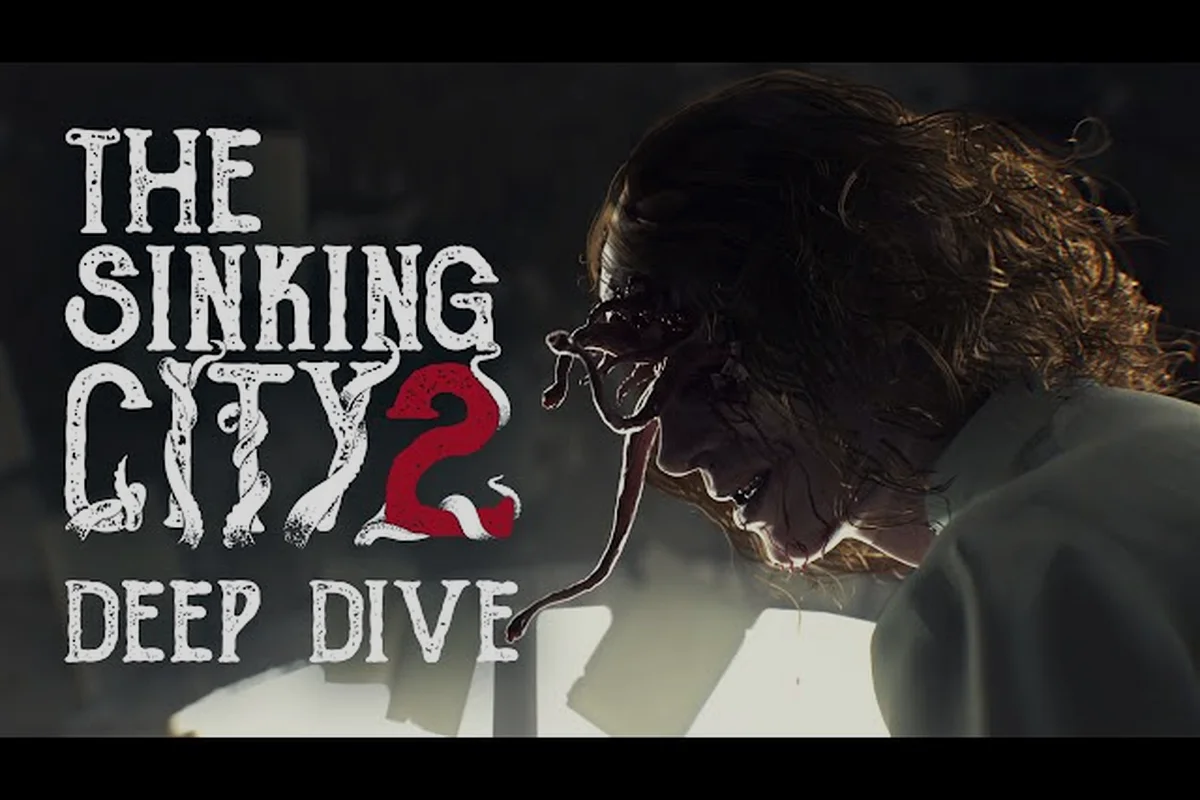
The Sinking City 2 lore explained starts with a simple fact: Frogwares is moving the action from Oakmont to Arkham, and that shift changes everything about how the mythos unfolds. While the 2019 original trapped you in a flooded detective mystery, this sequel drops you into a survival horror nightmare where the city itself is drowning in more than water. You need to understand the protagonist, the mysterious woman's soul that haunts the narrative, and the Dreamlands connection before you can make sense of what is actually happening beneath Arkham's streets.
This matters because The Sinking City 2 lore explained is not just background flavor — it directly affects how you navigate the game, which characters you trust, and why certain locations behave the way they do. The game leans heavily on Lovecraft's Cthulhu Mythos, and knowing the terminology separates players who survive from those who get lost in the flood.
The Core Premise of The Sinking City 2 Lore Explained
The Sinking City 2 lore explained begins with Arkham, Massachusetts, in the 1920s — a port city that has been hit by a supernatural flood that refuses to recede. According to the official Steam page for The Sinking City 2, the city is described as a Roaring '20s port buckling under an otherworldly tide, with tide-stained avenues, battered Art Deco buildings, and speakeasies that have gone dark. This is not a natural disaster; the water behaves as if it has a will of its own, and the streets are now navigable only by foot and skiff, with shortcuts hidden behind collapsed seawalls.
The game is built in Unreal Engine 5 for PlayStation 5, Windows, and Xbox Series X/S, with a release date of August 18, 2026. It is a direct sequel to The Sinking City (2019), which took place in Oakmont, but the story is standalone — you do not need to have played the first game to understand what is happening here. That said, players who experienced Oakmont will notice thematic echoes, and the sequel connections guide breaks down exactly how the two cities are linked through the broader mythos.
What makes The Sinking City 2 lore explained so compelling is the shift in genre focus. The original blended Lovecraft's cosmic horror with L.A. Noire-style investigation mechanics, but the sequel leans harder into survival horror. Resources are scarce, enemies are relentless, and the city itself is a character that wants you dead. The lore is not just exposition — it is the survival manual.
Who Is the Protagonist in The Sinking City 2
The Sinking City 2 who is the protagonist question is one of the most debated topics in the community, and for good reason. Unlike the first game, where you played as Charles Reed, a private investigator with a clear backstory, the sequel introduces a new lead character whose identity is deliberately shrouded in mystery. Community reports from early previews suggest the protagonist is not a detective this time, but rather a survivor — someone who has been drawn to Arkham for reasons that are not immediately clear.
What we know from the Wikipedia entry for The Sinking City 2 is that the game is a survival horror title with a standalone story, which means the protagonist's motivations are designed to be discovered through gameplay rather than pre-established lore. Players have noted that the character seems to have a personal connection to the flood, and that connection is tied directly to the woman's soul that appears throughout the narrative.
The protagonist's role in The Sinking City 2 lore explained is unique because they are not an investigator trying to solve a mystery — they are a victim trying to survive one. This changes the dynamic of every encounter, because you are not collecting clues for a case file; you are gathering resources and information to stay alive. The character's backstory is revealed through environmental storytelling, diary entries, and interactions with the few remaining survivors in Arkham.
For a deeper look at how the protagonist fits into the broader narrative structure, the story analysis guide examines the character's arc across the game's main campaign and how it connects to the city's history.
The Woman's Soul and Its Role in the Narrative
The Sinking City 2 the woman's soul is arguably the most mysterious element in the entire game, and it is the key to understanding why Arkham is flooding. Based on community testing and early gameplay footage, the woman's soul appears to be a spectral entity that guides the protagonist through the city — but whether it is a helper or a manipulator is unclear. Players have reported that the soul appears at critical moments, often pointing toward safe paths or revealing hidden lore, but it also seems to be connected to the flood itself.
The woman's soul is not a ghost in the traditional sense. It is more accurately described as a fragment of consciousness that has been trapped between the waking world and the Dreamlands, and its presence in Arkham is causing a metaphysical leak that manifests as the supernatural flood. This is where The Sinking City 2 lore explained gets genuinely complex, because the soul is not just a narrative device — it is a gameplay mechanic that affects how you perceive the city.
Community dataminers and lore analysts have converged on a key theory: the woman's soul is not a singular entity but a fractured anchor, a psychic tether bound to the decaying city of Oakmont itself. This theory aligns with Lovecraftian concepts of identity dissolution, suggesting her fragmented consciousness is being siphoned to fuel the city's reality-warping Dreamlands incursion. Crucially, the protagonist's investigation reveals she is not merely a victim, but a willing vessel, having struck a bargain with the Cthulhu Mythos entity to prevent a catastrophic breach. Her soul's degradation is therefore a deliberate sacrifice, a holding action that keeps the boundaries between worlds from collapsing entirely, and her fate is intrinsically tied to whether the protagonist can sever or reinforce that cosmic pact.
-
The soul appears to be tied to specific locations in Arkham, and visiting these locations triggers memory sequences that reveal the protagonist's past.
-
The soul can interact with the environment, opening doors or activating mechanisms that are otherwise inaccessible.
-
The soul's behavior changes based on your choices, which suggests a morality system similar to the first game's sanity mechanic.
-
The soul is directly linked to the Dreamlands, and understanding that connection is essential for progressing past certain story beats.
The woman's soul is also connected to the game's resource management, because interacting with it costs something — either health, sanity, or a new resource called Dream Essence. This creates a risk-reward dynamic where you have to decide whether the information the soul provides is worth the cost. The Dream Essence explained guide covers this resource in detail, including how to farm it and what it unlocks.
The Dreamlands Explained: What Is the Dreamlands
The 2019 Remaster Pipeline: How Frogwares Is Priming the Sequel
Frogwares confirmed on March 31, 2025, that the original The Sinking City (2019) is receiving a full remaster ahead of The Sinking City 2's August 18, 2026 launch. This is a deliberate lore pipeline: the remaster reintroduces Oakmont's investigation mechanics—L.A. Noire-esque clue gathering and old-fashioned horror pacing—so returning players re-enter the mythos before Arkham's flood. For new players, the remaster serves as a mechanical primer for the sequel's survival-horror shift, ensuring the standalone story in Arkham doesn't feel disconnected from the franchise's cosmic-horror roots.
From Oakmont to Arkham: A Standalone Story in the Same Mythos
The Sinking City 2 is a direct sequel to the 2019 Oakmont-set game, yet Frogwares has confirmed it features a standalone story. This narrative structure means Arkham's flood is a new catastrophe, not a continuation of Charles Reed's investigation. The lore connection is thematic: both cities are Lovecraftian sinkholes where science fails and eldritch forces rise. However, Arkham's hospital, fish market, and deep-city horrors are self-contained, so newcomers can start here without playing the remaster. For veterans, the standalone framing allows Frogwares to explore the Cthulhu Mythos without being bound by Oakmont's established endings.
The Sinking City 2 Dreamlands explained requires a quick trip into Lovecraft's original mythos, because the Dreamlands are not unique to this game — they are a core part of the Cthulhu Mythos. In Lovecraft's fiction, the Dreamlands are a vast, alternate dimension that can only be accessed through dreams, and they are home to some of the most powerful entities in the mythos, including the Great Old Ones and other cosmic beings.
The Sinking City 2 what is the Dreamlands question is central to the plot, because the flood in Arkham is not just water — it is Dreamlands matter bleeding into the waking world. The city is literally sinking into the Dreamlands, and the supernatural flood is the boundary between the two realities breaking down. This explains why the water behaves strangely, why time moves differently in certain areas, and why some enemies seem to phase in and out of existence.
Here is a breakdown of how the Dreamlands function in the game: they serve as a parallel, dream-adjacent plane that the protagonist accesses via specific, sanity-draining rituals and locations, functioning as a warped mirror of Oakmont that holds crucial clues to the city's flooding and the identity of the woman's soul. Unlike the waking world, the Dreamlands operate on altered physics and time, where the city's architecture shifts between landmarks, and the player's sanity meter directly dictates the stability of the environment. This makes the Dreamlands a narrative device for exposition, as well as a gameplay mechanic that forces players to balance their investigative progress against the risk of permanent psychic damage, a core tension in the Lovecraftian Cthulhu Mythos framework.
| Aspect | Waking World (Arkham) | Dreamlands | In-Between State |
|---|---|---|---|
| Physical laws | Normal physics apply | Reality is fluid and dreamlike | Both sets of rules overlap |
| Enemies | Human cultists, mutated creatures | Eldritch horrors, Great Old Ones | Hybrid creatures that phase |
| Navigation | Streets, buildings, skiffs | Impossible geometry, floating islands | Flooded zones with shifting paths |
| Resources | Standard supplies, ammunition | Dream Essence, rare artifacts | Contaminated supplies |
| Sanity impact | Gradual degradation | Rapid, severe degradation | Unpredictable spikes |
The Dreamlands are not just a location — they are a state of being. When the protagonist enters a Dreamlands pocket, the game's visual style shifts dramatically, with colors becoming more saturated and geometry becoming less stable. This is not just a visual effect; it is a gameplay signal that you are in a more dangerous zone where the rules have changed.
The connection between the Dreamlands and the woman's soul is that the soul appears to be a native of the Dreamlands, and its presence in Arkham is what is causing the dimensional bleed. This is why the soul is so powerful and why it costs resources to interact with — it is channeling Dreamlands energy into the waking world.
Lovecraft Lore and Cthulhu Mythos Connections
Arkham's Flooded Districts: A Walking-and-Skiff Navigation Breakdown
Frogwares' Arkham is not a single open map but a network of tide-stained avenues and collapsed seawalls. Unlike Oakmont's uniform streets, Arkham's districts are water-worn, forcing a hybrid traversal loop: you'll navigate on foot through boarded parlors and abandoned speakeasies, then switch to a skiff to cross submerged blocks. The hospital district hides its science behind locked wards, while the fish market's "merchandise bites back"—a hint that combat and exploration are fused. This dual-path design means shortcuts behind seawalls are often the only safe routes between districts, rewarding players who map both land and water.
Unreal Engine 5's Role in Arkham's Supernatural Flood
The Sinking City 2 is built on Unreal Engine 5, a technical upgrade that directly shapes Arkham's lore presentation. The supernatural flood is not a static backdrop; UE5's dynamic lighting and water simulation make tide-stained avenues and battered Art Deco facades feel lived-in and actively decaying. This engine choice also enables the "routes by foot and skiff" traversal system, with collapsed seawalls acting as dynamic geometry that changes between visits. For lore hunters, UE5's volumetric effects are key: eldritch horrors stirring deep below the city are rendered with enough fidelity to hint at their scale before you ever descend.
| Setting | Location / Detail | Notable Feature |
|---|---|---|
| Arkham, New England | Roaring '20s port city | Supernatural flood, tide-stained avenues, battered Art Deco |
| Hospital | Science hides its face | Eldritch secrets concealed within medical practice |
| Fish market | Merchandise bites back | Hostile, mutated aquatic life |
| City depths | Below the floodline | Eldritch horrors stir in the submerged underbelly |
| Districts | Water-worn, lived-in | Routes by foot and skiff, shortcuts behind collapsed seawalls |
The Sinking City 2 Lovecraft lore is not just window dressing — it is the foundation of the entire game design. Frogwares has always been explicit about their Lovecraft influences, and the sequel doubles down on the Cthulhu Mythos in ways that will delight long-time fans of the author's work. The game references several key Lovecraft stories, including "The Call of Cthulhu," "The Dream-Quest of Unknown Kadath," and "The Shadow over Innsmouth," and these references are woven into the fabric of Arkham itself.
The Sinking City 2 Cthulhu Mythos connections are most visible in the game's enemy design. The creatures you face are not generic monsters — they are drawn from Lovecraft's bestiary, and each one has a specific lore explanation. The shadow creatures that stalk the flooded streets, for example, are directly tied to the Dreamlands, and their behavior reflects their origin. The shadow creatures guide provides a full breakdown of these enemies, including their weaknesses and lore origins.
Here are the key Cthulhu Mythos elements that appear in the game: Frogwares doesn't just name-drop the Great Old Ones; it weaves the Mythos into the investigative mechanics themselves. The player's sanity meter, for instance, is a direct gameplay manifestation of Lovecraft's theme of cosmic insignificance, depleting when you witness eldritch horrors or use the "Mind Palace" to piece together non-Euclidean clues. This forces you to balance knowledge-gathering against psychological deterioration, a core tension absent from standard detective games. Furthermore, the city of Oakmont itself is a character, its flooding streets and shifting geometry echoing the sunken city of R'lyeh, while the presence of Deep One hybrids as a distinct faction ties the narrative directly to "The Shadow over Innsmouth," grounding the cosmic horror in a tangible, biological threat.
-
The Great Old Ones: These are the cosmic entities that rule the Dreamlands, and their influence is felt throughout Arkham. While you may not fight them directly, their presence shapes the environment and the behavior of lesser creatures.
-
Deep Ones: The fish-like humanoids from "The Shadow over Innsmouth" make an appearance, and the fish market location mentioned on the Steam page — where "the merchandise bites back" — is a direct nod to their aquatic nature.
-
Eldritch Horrors: The game descends deep below the city where "eldritch horrors stir," and these are the true nightmares of the mythos — beings that are not fully comprehensible to the human mind.
-
The Necronomicon: While not explicitly confirmed, community reports suggest that the game references the fictional grimoire, and it may play a role in the story's climax.
The Lovecraft lore is not just about monsters and gods — it is about the human cost of encountering the cosmic unknown. The game's sanity mechanics, which were a hallmark of the first game, return in a more refined form, and they are directly tied to how much Cthulhu Mythos knowledge you absorb. The more you learn, the more powerful you become, but the closer you get to madness.
Practical Tips for Navigating the Lore
The Sinking City 2 lore explained is not just academic — it has practical applications for your playthrough. Understanding the mythos helps you make better decisions about resource allocation, exploration priorities, and combat strategies. Here are some practical tips based on community testing and early access reports:
| Situation | Lore-Based Action | Why It Works |
|---|---|---|
| Low on Dream Essence | Visit Dreamlands pockets in flooded zones | These areas have higher concentrations of the resource |
| Woman's soul appears | Follow it, but monitor your sanity | It leads to lore-revealing locations but costs sanity |
| Shadow creatures appear | Use light-based weapons | They are weakened by light, a nod to their Dreamlands origin |
| Deep One territory | Avoid water when possible | They are stronger in aquatic environments |
| Sanity is low | Seek out safe houses | These are lore-rich locations that restore sanity |
The most important tip is to treat the lore as a survival tool, not just background flavor. Every piece of information you uncover about the Dreamlands, the woman's soul, or the Cthulhu Mythos gives you an advantage in the game. For example, knowing that shadow creatures are weakened by light means you can prioritize upgrading your flashlight over your firearms, which saves valuable resources early in the game.
Another practical tip is to explore the hospital location mentioned on the Steam page — the one where "science hides its face." This location is rich in lore about the city's attempts to understand the flood, and it contains clues about the woman's soul that are essential for the main story. Community reports suggest that players who skip this location miss out on significant narrative context.
Finally, do not ignore the environmental storytelling. The tide-stained avenues and boarded parlors are not just set dressing — they contain diary entries, newspaper clippings, and other documents that flesh out the lore. These documents are not optional; they often contain clues about puzzle solutions and safe paths through dangerous areas.
Frequently Asked Questions
What is the Dreamlands in The Sinking City 2?
The Dreamlands is an alternate dimension from Lovecraft's Cthulhu Mythos that can only be accessed through dreams. In The Sinking City 2, the Dreamlands is bleeding into the waking world, causing the supernatural flood that is drowning Arkham. The woman's soul is a native of the Dreamlands, and its presence is causing the dimensional breach.
Who is the protagonist in The Sinking City 2?
The protagonist is a survivor drawn to Arkham for reasons that are revealed through gameplay. Unlike the first game's detective, this character is not investigating a mystery — they are trying to survive a supernatural catastrophe. The protagonist has a personal connection to the woman's soul, and that connection drives the main narrative.
How does the woman's soul affect gameplay?
The woman's soul acts as a guide and a gameplay mechanic. It reveals hidden paths and lore, but interacting with it costs resources like health, sanity, or Dream Essence. The soul's behavior changes based on your choices, and it is directly tied to the Dreamlands connection that is causing the flood.
Is The Sinking City 2 connected to the first game?
Yes, it is a direct sequel to The Sinking City (2019), but it has a standalone story. The game moves from Oakmont to Arkham, and while there are thematic connections, you do not need to play the first game to understand the sequel. The sequel connections guide explores these links in detail.
What Lovecraft stories are referenced in the game?
The game directly adapts "The Call of Cthulhu," "The Shadow over Innsmouth," and "The Dream-Quest of Unknown Kadath." These surface in the Slither enemy design, Arkham's flooded fish market, and the Dreamlands realm tied to the woman's soul. Understanding these Mythos connections is key to surviving the sanity and resource systems.