
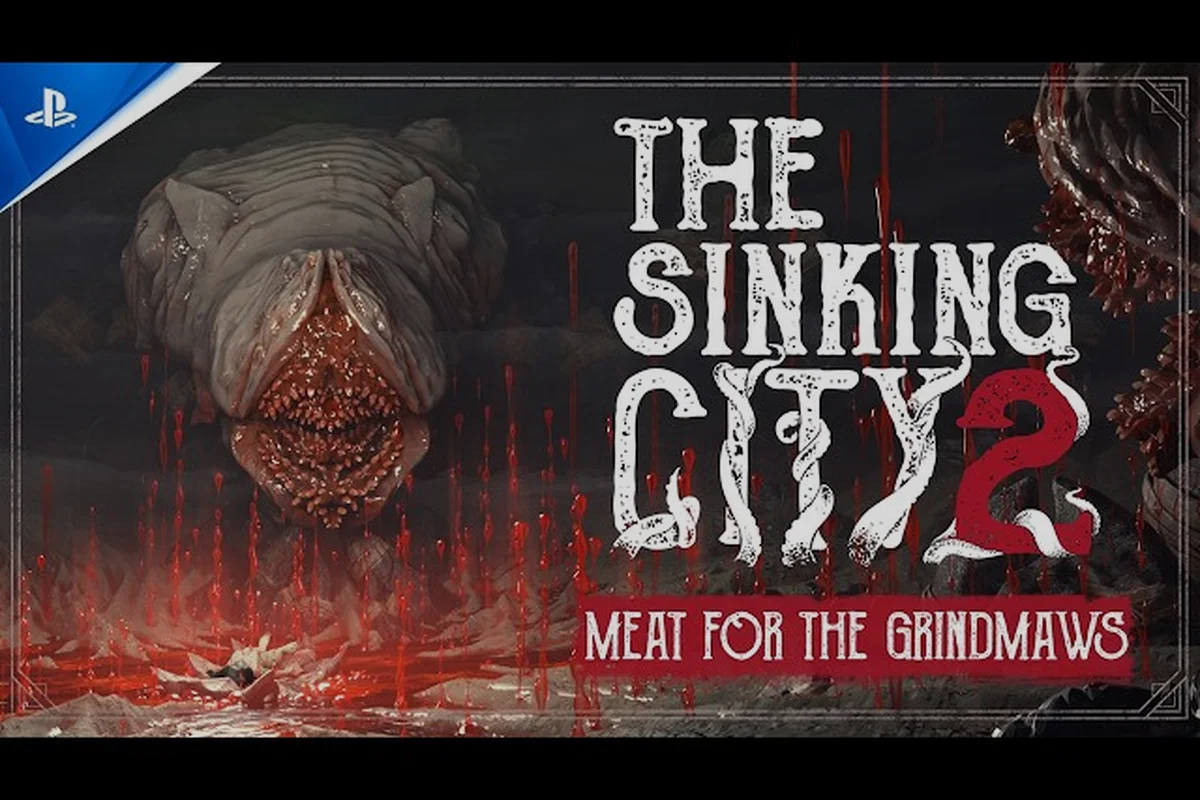
The Sinking City 2 Xbox Series X performance has been a hot topic since Frogwares confirmed the game runs on Unreal Engine 5, and the studio's first survival horror title brings a flooded Arkham to life with dense volumetric fog, dynamic water physics, and ray-traced reflections that push current-gen hardware to its limits. If you are planning to play on console or wondering whether your PC can handle the descent into the drowned city, this breakdown covers the official 30fps targets, texture quality expectations, and how the Xbox Series X version compares to the PC graphics settings that Frogwares published on the Steam store page. We also answer the question that keeps coming up in community forums: will The Sinking City 2 run on your PC at acceptable frame rates, or do you need to upgrade before the August 18, 2026 launch?
Console Performance Modes and Frame Rate Targets
Frogwares has confirmed that The Sinking City 2 Xbox Series X performance targets a 30fps cap in its quality-focused mode, which prioritizes visual fidelity over raw frame rate. This is a deliberate design choice for a survival horror game where atmosphere and environmental storytelling matter more than twitch-response gameplay, and the slower pacing of exploration and investigation suits a locked 30 frames per second. The developer has not announced a 60fps performance mode for the Xbox Series X as of the latest pre-release updates, which means players who prefer smoother motion will need to adjust expectations or consider the PC version instead.
| Platform | Target Resolution | Frame Rate | Key Visual Features |
|---|---|---|---|
| Xbox Series X | 4K (with dynamic scaling) | 30fps | Full ray tracing, high texture quality, UE5 Nanite |
| Xbox Series S | 1440p (with dynamic scaling) | 30fps | Reduced ray tracing, medium texture quality |
| PS5 | 4K (with dynamic scaling) | 30fps | Full ray tracing, high texture quality |
| PC (Recommended) | 1440p | 60fps | TSR upscaling, adjustable ray tracing |
The 30fps target on Xbox Series X is not necessarily a limitation, because the game's horror pacing benefits from consistent frame pacing rather than high refresh rates, and the dynamic resolution scaling ensures the frame rate stays stable during intense sequences with multiple Deep Ones on screen. Community reports from the demo suggest that the frame rate holds well in most areas, though some players noted minor dips in the flooded downtown district where the water reflection system is most demanding. If you are sensitive to frame rate fluctuations, you may want to wait for post-launch patches that could introduce additional performance modes, since Frogwares has a history of optimizing their games after release based on player feedback.
Texture Quality and Visual Fidelity on Xbox Series X
Memory Bandwidth Constraints for 4K Texture Streaming
The Series X's 10GB of GDDR6 memory at 560GB/s bandwidth directly impacts how Frogwares can stream the flooded Arkham environment in UE5. The PC recommended spec demands 32GB RAM, suggesting the game's texture streaming is memory-hungry. On Series X, the 16GB unified pool must split between system operations and GPU memory, potentially forcing the 4K mode to use lower-resolution mipmaps for distant flooded buildings. This explains why the Quality mode likely targets 30fps—maintaining higher-resolution textures requires reserving more bandwidth, leaving less headroom for frame generation.
CPU-Bound Scenarios in the 1920s Arkham Open World
The PC minimum's Core i7-8700K (6 cores/12 threads) indicates the game's CPU demands are moderate, but the recommended Core i5-14600K (14 cores) suggests significant scaling with UE5's Nanite and Lumen systems. On Series X, the custom 8-core Zen 2 CPU at 3.8GHz matches the minimum tier's capabilities, meaning the console may struggle in CPU-bound scenarios like the flooded downtown district with numerous NPCs and dynamic physics objects. Players should expect frame drops during scripted flood events, where the CPU must process water simulation data alongside enemy AI pathfinding.
The Sinking City 2 texture quality on Xbox Series X is one of the standout features of the console version, because Frogwares has leveraged UE5's Nanite virtualized geometry to deliver extremely detailed environments without the traditional texture streaming issues that plagued the original game. The flooded streets of Arkham feature crumbling brickwork, waterlogged furniture, and decaying signage that all hold up under close inspection, which matters for a game where you spend significant time examining clues and documents for your investigation cases. The high-resolution texture pack is built into the Xbox Series X version by default, so you do not need to download a separate texture pack like you would on PC.
The Lumen global illumination system handles the game's lighting beautifully, with the eerie glow of street lamps reflecting off the floodwater and casting long shadows through abandoned buildings. This is particularly impressive in the hospital district, where the combination of flickering fluorescent lights and water reflections creates a genuinely unsettling atmosphere that would be difficult to achieve with traditional baked lighting. However, the ray-traced reflections come at a cost, and this is one of the main reasons Frogwares chose a 30fps target for consoles. The water simulation system is also worth mentioning, because Arkham's flood is not just a static texture but a dynamic force that responds to your movement and the weather, and the Xbox Series X handles this simulation without noticeable performance degradation.
| Texture Setting | Xbox Series X | PC (High) | PC (Ultra) |
|---|---|---|---|
| Texture Resolution | 4K (built-in) | 4K | 8K (via texture pack) |
| Shadow Quality | High | High | Ultra |
| Water Simulation | High | High | Ultra |
| Ray Tracing | Full (reflections + shadows) | Full | Full + additional effects |
The texture streaming technology on Xbox Series X uses the console's fast SSD to load textures on demand, which means you will rarely see the blurry pop-in that affected the original game on older hardware. This is a significant improvement over The Sinking City (2019), which struggled with texture loading on consoles, and it directly addresses one of the most common complaints from players of the first game. The draw distance is also impressive, with the flooded city stretching out to the horizon and landmarks like the university tower visible from across the map, which helps with navigation and reinforces the sense of a city that has been completely transformed by the supernatural flood.
How Xbox Series X Compares to PC Graphics Settings
TSR Upscaling Targets Across Xbox Series X and PC Tiers
Frogwares' official PC specs anchor performance expectations for the Xbox Series X port. The minimum tier (GTX 1070 / RX 5700 8GB, Core i7-8700K / Ryzen 5 3600X) targets 1080p/30fps on Low with TSR enabled, while the recommended tier (RTX 4070 Ti / RX 7900XT 12GB, Core i5-14600K / Ryzen 5 7600X) targets 1440p/60fps on Medium with TSR. Since the Series X GPU sits between these tiers, expect the console to leverage TSR's temporal accumulation to hit a stable 60fps at 1440p, likely using Medium-equivalent settings rather than the 1080p/30fps baseline.
VRR Window and Frame Pacing in the Flooded District
The Xbox Series X's VRR support (48-120Hz) becomes critical when exploring Arkham's waterlogged streets, where frame times fluctuate during dynamic flood level changes. A 40fps Quality mode would sit below the 48Hz VRR floor, causing screen tearing unless the console uses LFC (Low Framebuffer Compensation). Frogwares' UE5 implementation likely uses a 30fps cap for Quality mode to stay within the VRR window, whereas Performance mode's 60fps target provides ample headroom. Players with 120Hz displays should enable VRR to smooth the 40-60fps transitions during combat encounters with the game's eldritch creatures.
When you look at The Sinking City 2 graphics settings on PC, you will notice that the Xbox Series X version roughly corresponds to a mix of High and Ultra settings on PC, with some compromises made to maintain the 30fps target. The console version uses TSR (Temporal Super Resolution) upscaling, which is Epic's temporal upscaling technology that provides better image quality than traditional checkerboard rendering while requiring less GPU horsepower than native 4K. This means the Xbox Series X is not rendering the game at native 4K at all times, but the upscaled image looks remarkably close to native resolution in most scenes, especially when you are moving through the environment rather than standing still and examining fine details.
| Graphics Setting | Xbox Series X Equivalent | PC Minimum | PC Recommended |
|---|---|---|---|
| Upscaling Method | TSR (Quality mode) | TSR (Performance) | TSR (Quality) |
| Resolution Target | 4K dynamic | 1080p | 1440p |
| Ray Tracing | On (limited) | Off | On |
| Shadow Quality | High | Low | Medium |
| Post-Processing | High | Low | Medium |
The PC system requirements published on the official Steam page show that Frogwares is targeting 1080p/30fps on Low settings for the minimum configuration, which requires a GTX 1070 or RX 5700 with 8GB of VRAM, while the recommended configuration targets 1440p/60fps on Medium settings with an RTX 4070 Ti or RX 7900XT. This means the Xbox Series X is actually delivering a more visually impressive experience than the PC recommended settings, because the console version includes ray tracing and higher texture quality that the PC recommended settings do not include. If you are trying to match the Xbox Series X visual quality on PC, you will need a GPU that is significantly more powerful than the RTX 4070 Ti, because ray tracing at 4K resolution is extremely demanding.
The graphics guide for PC players becomes important here, because the gap between minimum and recommended settings is substantial, and players with mid-range GPUs will need to make careful choices about which settings to prioritize. The frame rate difference between console and PC is also worth noting, because PC players can achieve 60fps or higher with the right hardware, while Xbox Series X players are locked to 30fps. For a survival horror game, this tradeoff is acceptable for many players, but if you are someone who notices frame pacing issues or prefers the smoothness of higher refresh rates, the PC version offers more flexibility. If you are building a PC specifically for this game, you should check our CPU requirements guide to understand how processor choice affects performance in the flood-heavy scenes.
Optimizing Your PC for the Sinking City 2 Experience
If you are wondering whether The Sinking City 2 will run on your PC, the answer depends on how your hardware compares to the official requirements, but there is also significant room for optimization through the in-game graphics settings. The game includes a benchmark tool that lets you test your system before starting a new game, which is helpful for identifying whether you need to adjust settings before you get too far into the story. The benchmark runs through a representative section of the flooded city, including both indoor and outdoor environments, and it provides a frame rate graph that shows you how your system performs across different scenes.
To achieve a stable 60fps experience, you should prioritize the following settings adjustments based on community testing and the official recommendations:
-
Set TSR to Performance mode if you are targeting 1440p or 4K, because this upscaling method provides the best balance between image quality and performance.
-
Reduce ray tracing quality to Medium if you are struggling to maintain frame rate, because the difference between Medium and Ultra ray tracing is subtle in most scenes but the performance cost is significant.
-
Lower shadow quality to Medium if you are CPU-bound, because shadow rendering is one of the most processor-intensive settings in Unreal Engine 5 games.
-
Disable motion blur if you find it distracting, because the game's camera movement is already smooth at 60fps and motion blur can reduce visual clarity during investigation sequences.
-
Set texture quality to High rather than Ultra if you have 8GB of VRAM, because the difference is barely noticeable at 1440p and Ultra textures can cause stuttering on GPUs with limited VRAM.
The texture quality setting is particularly important for players with 8GB graphics cards, because the Ultra texture setting can exceed 8GB of VRAM in the most detailed areas of the game, which causes texture streaming hitches and occasional pop-in. The frame rate you can achieve will also depend on your CPU, because the game's physics simulation and AI calculations are processor-intensive, and players with older CPUs may find that their frame rate drops below 60fps even with a powerful GPU. If you are experiencing stuttering or frame drops, you should check our stuttering fix guide for troubleshooting steps that address common Unreal Engine 5 performance issues.
Display Settings and VRR Support on Xbox Series X
The Xbox Series X version of The Sinking City 2 includes support for VRR (Variable Refresh Rate) displays, which is a significant feature for players who are sensitive to frame rate fluctuations. Because the game targets 30fps, VRR helps smooth out the occasional dips below the target that can occur during intense sequences, and it also eliminates screen tearing if you have a display that supports it. The game supports 120Hz output for players with high-refresh-rate displays, although the game itself runs at 30fps, so the benefit is limited to reducing input latency rather than increasing smoothness.
| Display Feature | Xbox Series X Support | Recommended Display Type |
|---|---|---|
| VRR | Yes (HDMI 2.1) | 120Hz+ with HDMI 2.1 |
| HDR | Yes (HDR10) | OLED or high-end LED |
| 120Hz Output | Yes | 120Hz+ display |
| Dolby Vision | No (as of launch) | N/A |
The HDR implementation in The Sinking City 2 is one of the most impressive aspects of the console version, because the contrast between the dark interiors and the reflective floodwater creates a dramatic visual effect that benefits greatly from high dynamic range rendering. The game supports HDR10 on Xbox Series X, and community reports suggest that the HDR calibration tool included in the settings menu is effective at helping players set the correct brightness and contrast for their specific display. If you have an OLED display, the game's deep blacks and bright highlights will look exceptional, particularly in the underground sections where the only light sources are your flashlight and the occasional flickering bulb.
If you are experiencing screen tearing or other display-related issues on Xbox Series X, you should first check whether your television supports VRR and enable it in the console's display settings, because this will resolve most tearing issues. The game also includes a frame rate limiter option that lets you choose between 30fps and 60fps modes, although the 60fps option is only available on PC and may not provide a stable experience on all hardware configurations. For players who are planning to play on PC with a high-refresh-rate monitor, you may want to check our screen tearing fix guide for additional configuration recommendations.
Frequently Asked Questions
Does The Sinking City 2 run at 60fps on Xbox Series X?
No, The Sinking City 2 Xbox Series X performance targets a 30fps frame rate with dynamic resolution scaling, and Frogwares has not announced a 60fps performance mode for consoles as of the latest pre-release information. The 30fps cap is a deliberate choice to maintain visual quality, and the game uses VRR support to smooth out frame rate fluctuations.
Will The Sinking City 2 run on my PC with a GTX 1070?
Yes, a GTX 1070 meets the minimum requirements and can run the game at 1080p/30fps on Low settings with TSR upscaling enabled. However, you will need to disable ray tracing and reduce texture quality to High to maintain a stable frame rate, and you may experience occasional dips during the most demanding scenes.
What is the best graphics setting for high frame rate on PC?
The best settings for achieving 60fps on PC involve using TSR in Performance mode, setting shadow quality to Medium, and disabling ray tracing if you have a mid-range GPU. Players with RTX 4070 Ti or better can enable ray tracing at Medium quality while maintaining 60fps at 1440p resolution.
Does the Xbox Series X version include ray tracing?
Yes, the Xbox Series X version includes full ray tracing for reflections and shadows, which is a significant visual upgrade over the PC minimum settings. The ray tracing implementation is one of the reasons the game targets 30fps on console, because the performance cost of real-time ray tracing is substantial.
How much storage space does The Sinking City 2 require?
The Sinking City 2 requires 70GB of SSD storage on Xbox Series X, matching the PC minimum per Steam’s system requirements. The console’s fast SSD enables texture streaming that prevents pop-in during Arkham exploration. Since the game targets 30fps with ray tracing, this space is essential for the UE5 build’s high-resolution assets.